

Honesty as Self-Preservation
"To thine own self be true.”

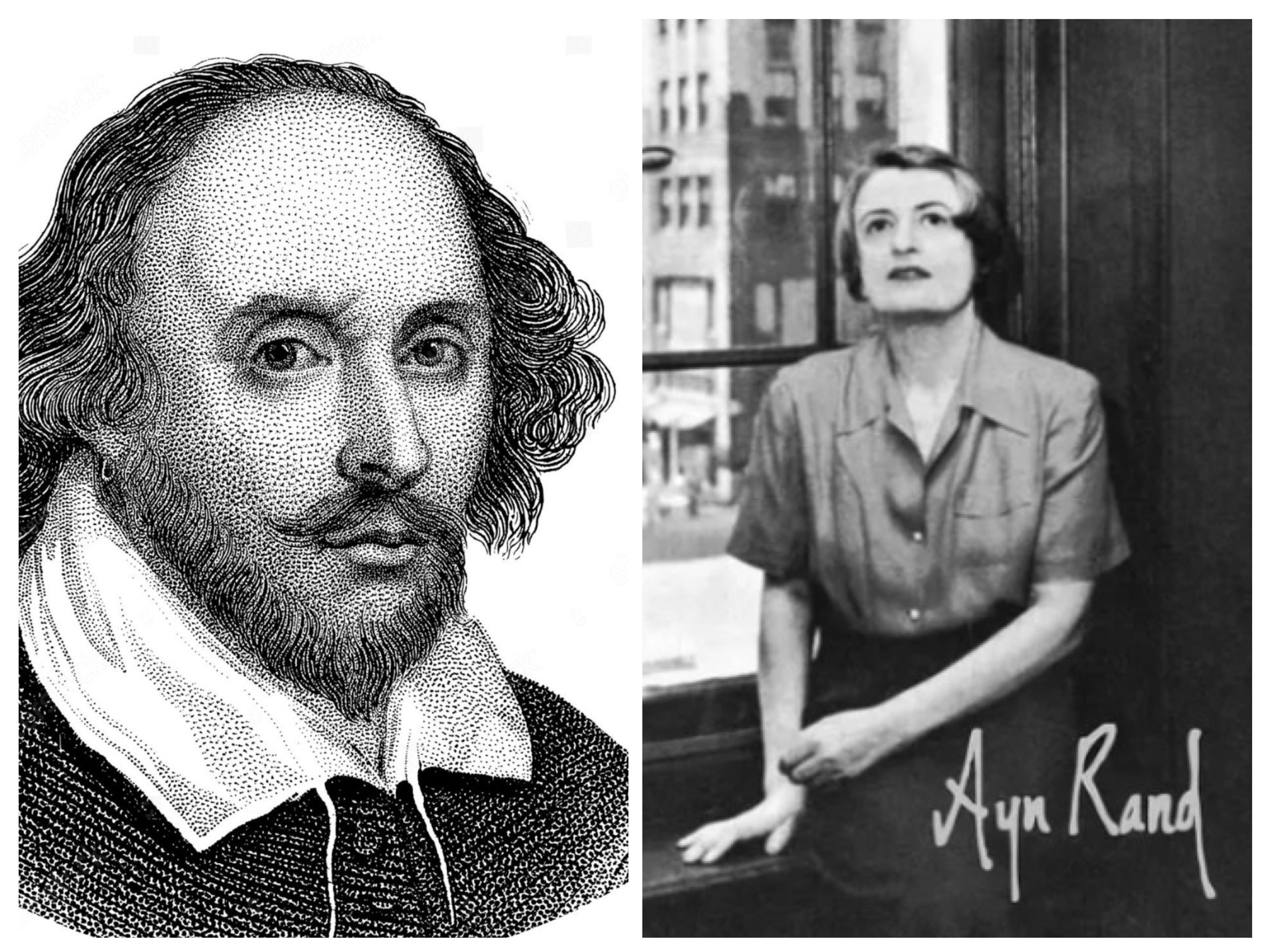
In 1600, England stood out as the freest country in Europe. Ruled for over 40 years by the benevolent and mostly hands-off Elizabeth I, freedom meant religious freedom and the opportunity to escape the bonds of serfdom. Immigrants flooded in, especially from rigid, authoritarian France. Modernity was on the rise. In the arts, Shakespeare, a playwright, led the charge, setting a backdrop for new ideas about selfhood and truth.
William Shakespeare knew his audience. In Act I, Scene III, Polonius gives his son, Laertes, advice as he leaves for college in Paris. The Sorbonne students embraced the play as an engraved invitation to travel to London.
They traveled to London to see Hamlet for themselves. The play’s most famous soliloquy, “To be or not to be, that is the question…” was unaskable in France. Students returned repeatedly, copying the speech to bring back to France. Hamlet became a rite of passage to experience in person.
Shakespeare is often credited as the first author of modern English. His line “to thine own self be true” ties honesty to the self. In Hamlet, this line serves as a tease, a polite social nicety. However, the reference to “thy own self” raises an original thought: there is value in a moral virtue, both personally and socially. Honesty ultimately fails in Hamlet, not because of its goodness (Shakespeare’s view), but because it lacks the structure that future thinkers would add.
Ayn Rand, in the twentieth century, understood honesty as more than a social virtue. In The Objectivist Ethics, she identified Rationality, Productivity, and Pride as major virtues, with honesty as a component of rationality.
Understanding Rand’s view, rationality is the use of your mind to understand the world. Your rational faculty can function only when you ground your thinking in your honest assessment of reality. Without honesty, there is no logical structure to guide your actions. Honesty is a survival practice—loyalty to reality as the precondition of self-preservation.
The After Rand Project seeks to present Ayn Rand’s philosophy from new perspectives and make deeper connections. By exploring honesty in both Rand and Shakespeare, this essay argues that honesty’s deepest value lies in its role as the foundation of rational self-preservation.
Two American Presidents made their reputations on truthfulness. A young George Washington accepted responsibility for a mishap, saying, “Father, I cannot tell a lie.” Abraham Lincoln was known affectionately as Honest Abe,
Honesty as a virtue is implicit — “do not lie,” for children between ages three and five. As we mature, the meaning of honesty becomes more complex and foundational.
Seen this way, honesty sits at the base of rationality, anchoring man’s fidelity both to reason as his means of survival and to the reality in which he lives. This foundation links the philosophical to the practical.
To be honest is to refuse to fake reality—to keep one’s consciousness aligned with facts because one’s life depends on it. The “self” to which one must be true is not a feeling, a role, or a persona, but the reasoning mind in a human body whose life is conditional. In this sense, honesty is not altruistic or sacrificial; it is a tool of self-preservation.
In summary, what Shakespeare captures intuitively in sound, Rand explains functionally: honesty is loyalty to reality, and reality is the only ground on which a self can survive.
It is Ayn Rand who supplies the practical morality that Shakespeare’s era left ungrounded. For Rand, honesty is not a social grace or a moral ornament; it is a practical necessity. To be honest is to refuse to fake reality—to keep one’s consciousness aligned with facts because one’s life depends on it. The “self” to which one must be true is not a feeling, a role, or a persona, but the reasoning mind. In this sense, honesty is not social, altruistic, or sacrificial; it is a tool of self-preservation. To repeat :
What Shakespeare captures intuitively in sound, Rand explains functionally: honesty is loyalty to reality, and reality is the only ground on which a self can survive.
Hamlet, written in 1602, is Shakespeare’s most performed play and a study of “good” intentions failing in the absence of a rational moral structure. Polonius’s advice, “To thine own self be true,” reflects a vain hope rather than a method. Ayn Rand’s philosophy would emerge centuries later, so Hamlet stands as a vivid examination of what results when honesty is abandoned or replaced with dishonesty.
Ayn Rand frequently spoke of a “hierarchy of values,” and in doing so left open the work of discovery rather than closing it off. The purpose of this essay is not to revise that hierarchy, but to stand gratefully beside her achievement and identify its base: honesty, the ground beneath rationality, from which we come to understand the rest. This provides a clear path for further exploration.
As a result, we can view Hamlet as a brilliant case study of honesty abandoned at every turn. The results are death: by stabbing while hiding behind a hanging rug (Polonius), drowning (Ophelia), and suicide (Hamlet). The fact that Ayn Rand’s philosophy came 350 years later must not count against the Bard’s work. Hamlet is still a play worth knowing. It is a graphic depiction of the damage of abandoning reality for the sake of wishful thinking or irrational motives.
I'm saving this essay to review before my next attendance of Hamlet. Nicely done.
Great essay, Ilene. Honestly!